Pearson Edexcel · A-Level · English Literature
Course version: 9ET0 · Version from Sept 2015
Prose: show knowledge and understanding of how genre features and…
Full specification wording
Component 2: Prose: show knowledge and understanding of how genre features and conventions operate in prose fiction texts
Understanding genre in prose fiction requires analysing how writers use, subvert, or blend established conventions to shape meaning and reader expectations.
Checked against the Pearson Edexcel 9ET0 specification (opens in a new tab) on .
- Point 1 of 2
- 4 key terms
Study notes
From the checked teaching notes for this specification point.
The idea
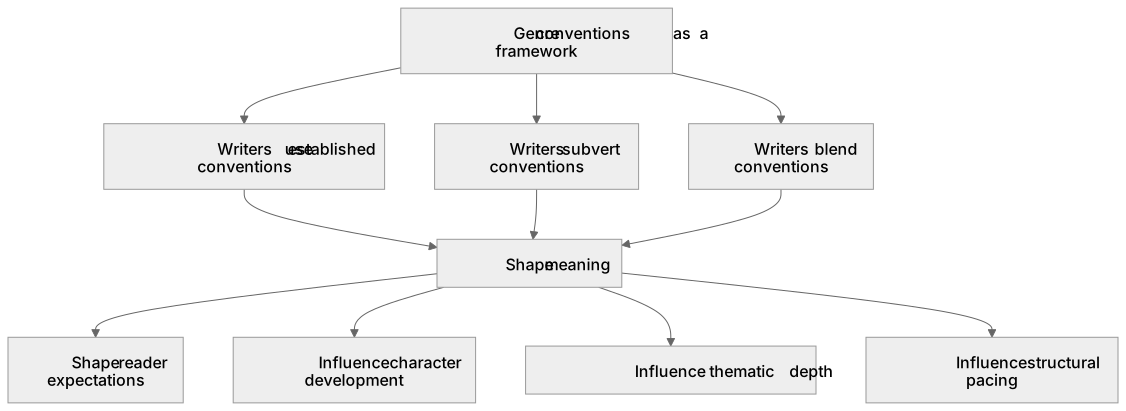
Understanding genre in prose fiction requires analysing how writers use, subvert, or blend established conventions to shape meaning and reader expectations. Genre features operate as a framework; for example, in Gothic fiction, conventions like isolated settings, the supernatural, and psychological terror create an atmosphere of dread. However, authors rarely follow these rules rigidly. A text might adopt the epistolary form of a romance but subvert it to critique gender roles, or use science fiction tropes to explore contemporary political anxieties. You must demonstrate how these genre conventions operate actively within the narrative, influencing character development, thematic depth, and structural pacing, rather than merely spotting and listing them.
What earns the marks
- Identify specific genre conventions present in the prose texts, such as dystopian tropes, Gothic motifs, or elements of social realism.
- Analyse how these features operate to shape the narrative structure and influence reader expectations.
- Evaluate instances where the author subverts or challenges traditional genre expectations to create new meanings.
- Connect the use of genre features to the broader thematic concerns and contextual background of the novel.
Common mistakes and how to put them right
Merely listing genre features without analysing their effect.
Put it right: Explain how the convention drives the plot or theme.
Treating genre as a rigid set of rules.
Put it right: Recognise that authors frequently blend or subvert genres for specific purposes.
Ignoring the historical evolution of a genre.
Put it right: Acknowledge how genre conventions change depending on the context of production.
Exam tips
- Use specific terminology related to your chosen theme's genre, such as 'unreliable narrator' in crime or 'pathetic fallacy' in Gothic texts.
- Compare how two different texts utilise similar genre conventions to achieve different thematic effects.
- Always link the identification of a genre feature back to the specific question being asked about the text.
Try the lesson
The start of the Component 2: Prose: show knowledge and understanding of how genre features and conventions operate in prose fiction texts lesson, made from checked teaching notes for this specification point.
Have a go first
Which of the following best describes a common convention of the Gothic genre in prose fiction?
Listen
Understanding genre in prose fiction requires analysing how writers use, subvert, or blend established conventions to shape meaning and reader expectations. Genre features operate as a framework; for example, in Gothic fiction, conventions like isolated settings, the supernatural, and psychological terror create an atmosphere of dread. However, authors rarely follow these rules rigidly. A text might adopt the epistolary form of a romance but subvert it to critique gender roles, or use science fiction tropes to explore contemporary political anxieties. You must demonstrate how these genre conventions operate actively within the narrative, influencing character development, thematic depth, and structural pacing, rather than merely spotting and listing them. A strong answer earns marks for these points. Identify specific genre conventions present in the prose texts, such as dystopian tropes, Gothic motifs, or elements of social realism. Analyse how these features operate to shape the narrative structure and influence reader expectations. Evaluate instances where the author subverts or challenges traditional genre expectations to create new meanings. Connect the use of genre features to the broader thematic concerns and contextual background of the novel. A common slip: Merely listing genre features without analysing their effect. Instead, explain how the convention drives the plot or theme. Exam tip: Use specific terminology related to your chosen theme's genre, such as 'unreliable narrator' in crime or 'pathetic fallacy' in Gothic texts.
See it
Key words
Say what each word means before you turn the card.
Genre subversion and blending
Try answering aloud or in your head before turning the card.
Reader expectations and reception
Try answering aloud or in your head before turning the card.
Narrative frameworks and tropes
Try answering aloud or in your head before turning the card.
Contextual influences on genre
Try answering aloud or in your head before turning the card.
See every definition
- Genre subversion and blending
- Writers use, subvert, or blend established conventions, recognising that authors frequently blend or subvert genres for specific purposes rather than following rules rigidly.
- Reader expectations and reception
- Genre features operate as a framework that shapes meaning and reader expectations, and analysis should consider how features influence reader response.
- Narrative frameworks and tropes
- Genre features operate actively within the narrative, influencing character development, thematic depth, and structural pacing rather than merely being spotted and listed.
- Contextual influences on genre
- Genre conventions change depending on the context of production, and use of genre features should be connected to broader thematic concerns and contextual background.
Label the diagram
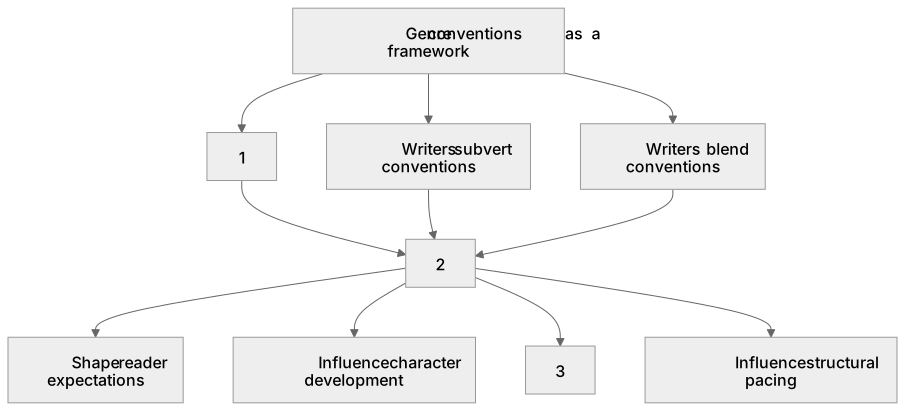
Some boxes have lost their names. Pick the right name for each number.
1Box 1
2Box 2
3Box 3
There is more to this lesson
The full lesson goes on to check your understanding and help you earn the marks. Create a free account to carry on, with your progress saved.
A week of Premium from your first lesson · Then the free plan continues · No card, no charge
Test your understanding of Component 2: Prose: show knowledge and understanding of how genre features and conventions operate in prose fiction texts
Active recall beats re-reading. Take an instant quiz now to test what you’ve learned and lock it into long-term memory.
A week of Premium from your first lesson · Then the free plan continues · No card, no charge